
I remember when I launched my first website. I had the design looking decent, a few pages up, and I genuinely thought people would just… find it. Like somehow Google would notice I existed and start sending visitors my way.
That’s not how it works. I found that out pretty quickly.
If you’re in that same spot right now site is live, crickets are chirping this guide is for you. I’m not going to throw a hundred technical terms at you. I’ll just walk you through what actually matters when you’re starting from zero.
First, What Even Is SEO?
SEO means Search Engine Optimization. I know, sounds corporate. But strip it down and it’s really just this: making sure Google understands what your website is about so it can recommend it to the right people.
When you type something into Google and hit enter, those results didn’t land there randomly. Each one earned its spot through content, through structure, through trust built over time. The whole point of SEO is to work toward that same thing for your site.
And no, you don’t need to hire anyone or spend money on ads to get started. You just need to understand a few fundamentals.
Start With Keywords But Not the Obvious Ones Most beginners make the same mistake: they go after big, broad keywords. “Digital marketing.” “Fitness tips.” “Travel blog.” These have millions of competing pages already fighting for them. You won’t win that fight in year one, maybe not even year two. What actually works early on is going narrow. These are long-tail keywords. They are less commonly searched for due to their length, but they are also less commonly targeted. For novel sites, the phrase “how to start a travel blog with no followers” is an example of a long-tail keyword that is much better valued than the targeted phrase “travel blog”.
At the end of the day, long-tail keywords describe what the customer is searching for, which is typically more detailed and targeted than “travel”.
This keyword targets exactly what they typed into the search engine.
Write Content That Is Useful
For content that Google surf’s, use filler content that doesn’t cut it. Keyword stuffing with thin content is useless and won’t even show up on the search engine. Google has mastered the art of answering searches with useful content and has widely published such results.
You can explain something that is simple to a friend and Google algorithms operate in much the same way. Elaborate on something that is simple if a search result serves a useful purpose.
Google validates every individual page of a site more than the site as a whole. Every article you publish is its own shot at showing up in search. That’s actually freeing once you realize it. You don’t need a perfect site. You need consistently useful pages.
RankDMS covers this kind of practical SEO thinking really well it’s one of the better beginner-friendly resources I’ve come across that doesn’t make you feel like you need a computer science degree to follow along.
The On-Page Stuff You Can’t Skip
On-page SEO refers to the things you do page-by-page to optimize your site’s searchability. While the results may not look appealing, they certainly matter.
Title tag: This is what appears as the headline people click on in the Google search results. This should be less than 60 characters, relevant to your page, and interesting to click.
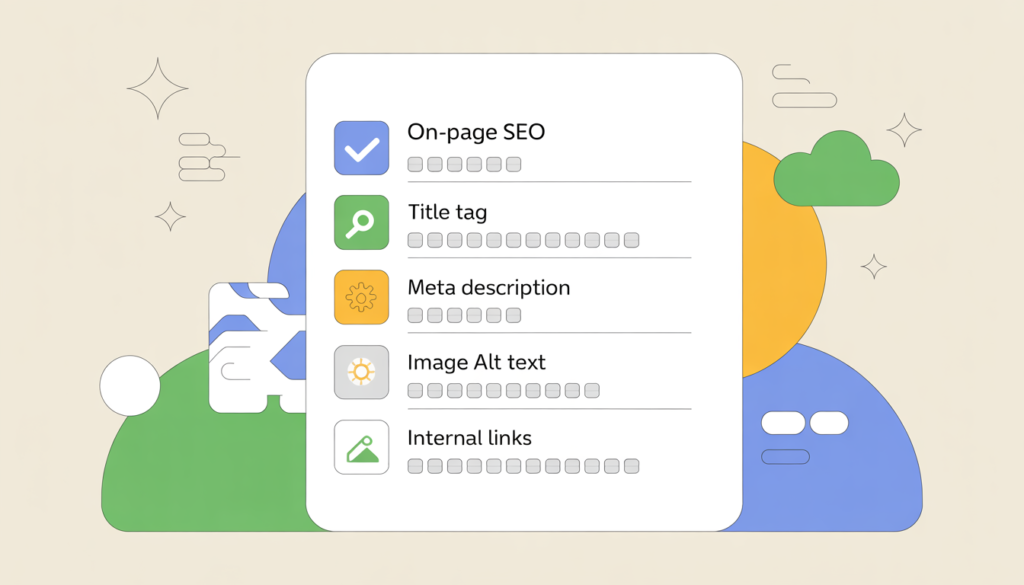
Meta description: The short summary that follows the page title. It may not improve your SEO ranking but good meta descriptions lead to more clicks. These should be under 150 characters and provide useful information.
Headings: Use an H1 title for the main title, and H2 for section headers. These are useful for both readers and search engines in understanding the content of the page.
Alt text on images: Just add a short description of what the image shows. Man typing on a laptop is great. This works for accessibility and gives search engines more info.
Internal links: If relevant, linking to your own content helps readers remain on your site longer and helps Google find more of your pages.
A Few Technical Things Worth Knowing
You don’t need to go deep into the weeds here, but three things genuinely affect how well your site performs:
Speed. You can lose visitors if your page takes time to load. Reduce the size of your images before you post. Don’t go for the cheapest option when buying hosting, and if you’re on WordPress, use caching. These small differences can make a huge impact.
Mobile. Your site has to work on a phone. Not just “kinda work” work well. Before Google ranks any site, it considers your mobile version first, so if the mobile version is lacking, you’re already at a disadvantage.
HTTPS. The little padlock in the browser address bar. If your site still shows “Not Secure,” fix that today. Most hosts offer free SSL certificates. Google uses this as a ranking signal and visitors trust it.
The Honest Part About Timing
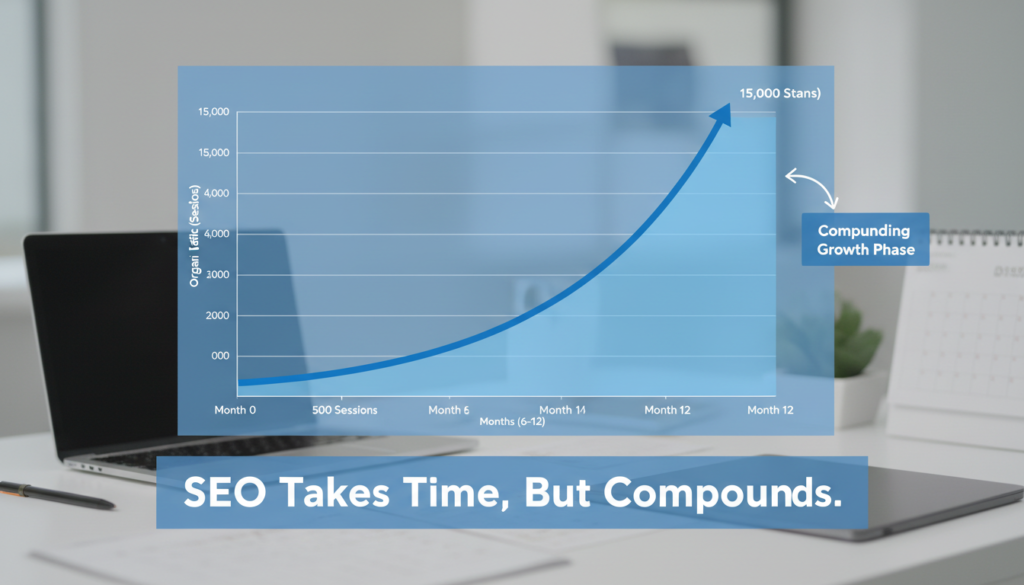
SEO doesn’t deliver fast results. I’m not going to pretend otherwise. A brand-new website in a competitive space might wait four to six months before seeing meaningful search traffic. Sometimes longer.
The way to stay sane through that period is to stop measuring success by traffic in month one, and start measuring it by consistency — are you publishing? Are you improving pages? Are you learning from what Google Search Console is telling you?
The sites that do well long-term aren’t necessarily the ones with the biggest budgets. They’re the ones that kept going when the early numbers looked discouraging.
When you’re ready to go beyond the basics, the digital marketing services at RankDMS are worth a look they work with real websites on content strategy, audits, and the kind of ongoing optimization that compounds over time.
Just Start. Seriously.
The trap I see constantly is people spending weeks “researching SEO” before publishing anything. Meanwhile, nothing is going up, nothing is getting indexed, nothing is learning from real visitor behavior.
Pick one keyword. Write one useful page. Handle the basic on-page stuff. Hit publish.
Then do it again. SEO is mostly just that, repeated.
5 Questions People Usually Ask
1- How many keywords per page?
One main keyword, with a few naturally related phrases woven in. Don’t force it. If you’re awkwardly repeating a phrase just to “hit” a keyword count, step back it reads poorly and it doesn’t help your ranking.
2- Does my site need a blog for SEO?
Technically no, but in practice a blog is one of the most efficient ways to grow organic traffic. Each post is a new page targeting a new keyword. Static websites with five pages have a much harder ceiling than sites that keep adding useful content.
3- What’s the difference between on-page and off-page SEO?
On-page is everything within your control content, titles, structure, speed. Off-page is mainly about backlinks: other sites linking to yours. Search engines treat backlinks like votes of confidence. You can’t fully control them, but you can earn them.
4- Is a blog essential for my site’s SEO?
Technically no, but in practice a blog is one of the best ways to grow organic traffic. Every post is a new page with a new keyword. A static site with five pages has a much lower ceiling than a site that keeps adding useful content.
5- On-page SEO vs Off-page SEO What’s the difference?
On-page is everything you can control – content, titles, structure, speed. Off-page is mostly about backlinks. Other sites linking to you. Backlinks are seen by search engines as votes of confidence. You can’t completely control them, but you can earn them by publishing content that is really worth referencing.