
I want to start with something a little bit uncomfortable.
Most SEO content you’ll find online including a lot of “expert” guides are written by people who understand the theory but haven’t actually done the work recently. They’re recycling frameworks that made sense two or three years ago, slapping fresh language on them and calling it current advice.
I’m not gonna do that here.
What I want to share is what’s actually happening in search right now the shifts that are quietly separating sites that are growing from sites that are stuck. Some of it will confirm what you already suspect. Some of it might push back on what you’ve been told.
Either way, I think it’s worth the conversation. And if you want to go deeper on any of these topics after reading, the RankDMS Blog is one of the better places I’ve found for practical, current SEO thinking not just recycled theory.
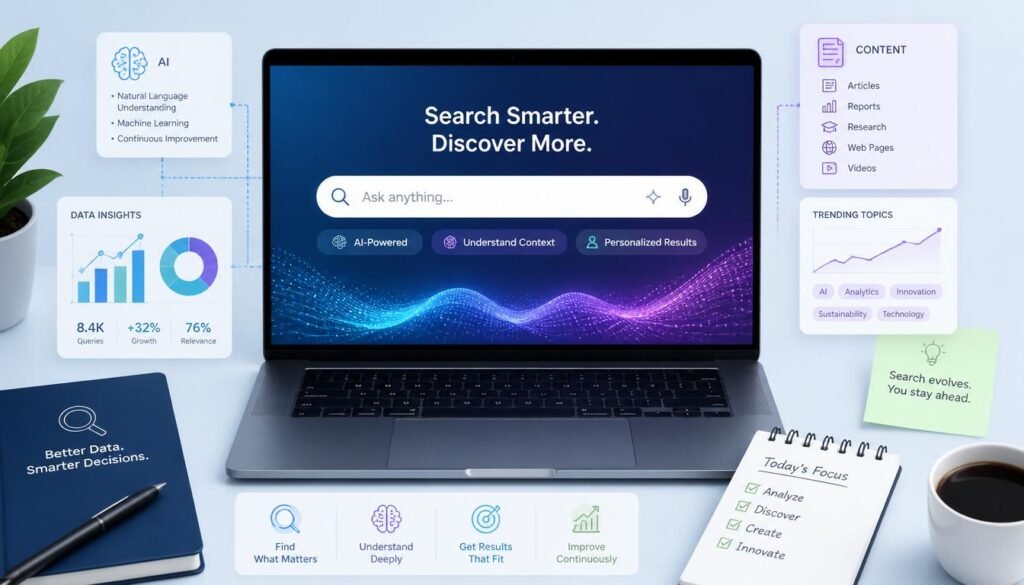
AI Changed Search Just Not the Way the Headlines Said It Would
When AI tools exploded in popularity, a lot of marketers got excited about the wrong thing. The thinking went something like: AI can write content fast, so we can publish more, rank for more keywords, and win. Simple enough logic.
Except it backfired badly for a lot of sites.
Here’s the thing Google figured out pretty quickly and honestly, it wasn’t hard AI-generated content at scale tends to have a specific texture to it. Smooth. Competent-sounding. Completely devoid of anything that feels like a real person actually lived through the subject.
Goal is to eliminate all rough edges, removing any trial and error explanations or controversial opinions that might cause disagreement.
Just… polished emptiness.
Search engines are better than ever at detecting that texture. And more importantly, readers are better at detecting it. People bounce fast when content doesn’t give them anything real to hold onto.
The actual lesson from the AI era isn’t “write more content faster.” It’s the opposite. It’s: slow down, bring a real perspective, write fewer pieces that are genuinely worth reading. That’s what’s winning right now.
The Keyword Era Is Over. The Question Era Is Here.
Think about the last time you typed something into Google that was just two or three disconnected words.
Probably not recently, right?
The way people search has changed dramatically. Real searches now sound like real questions sometimes long, specific, almost conversational. What is a good project management software for small team, which is not willing to pay per user? That’s a search. Not “project management software.
Search engines have been adhering to this shift very well. It’s no longer about matching words on a page to words in a query. They’re working to understand what the person is really looking for and the problem they’re solving and serve the content that’s best suited to address it.
Put simply, you should consider the person first, and the keyword second. Who’s searching this? What is the problem that they are in? What could be of benefit to them? For that, write, and keyword optimization will take care of itself the most.
Don’t forget the fundamentals. Things like fast loading speeds, mobile friendliness, content that is easy to scan and navigate impact rankings directly in the here and now. A technically optimized page that is not easy to use, won’t keep your position. Google observes your users’ actions on your site. A high bounce rate tells a story.
Trust Isn’t a Soft Concept Anymore. It’s a Hard Ranking Signal.
E-E-A-T Experience, Expertise, Authoritativeness, Trustworthiness gets mentioned in a lot of SEO articles, usually in a vague, hand-wavy way. “Build trust with your audience.” Thanks, very helpful.
Let me be more specific about what it actually requires.
Search engines are trying to answer one question about your content: why should anyone believe this? Not in a philosophical sense. In a very practical sense. Who wrote it? Do they know what they’re talking about? Do other credible sources reference them? Has this site been consistent and accurate over time?
For industries like healthcare, finance, and legal where wrong information genuinely hurts people Google has been scrutinizing this hard for years. But that scrutiny has been spreading to other niches too.
The things that actually move the needle here aren’t complicated. Real author profiles with genuine credentials. Backlinks from respected sites that are essentially vouching for you. A track record of publishing things that turn out to be accurate. Transparent sourcing.
None of it is quick. All of it compounds. A site with strong trust signals is much harder to displace than one that just has good technical SEO.
Clicks Aren’t the Only Metric That Matters Anymore
This one genuinely caught some smart marketers off guard.
Google now answers a huge number of searches directly on the results page featured snippets, knowledge panels, quick answer boxes. Voice assistants read out a single result. The user gets what they need without ever clicking through to a website.
For traffic-obsessed marketers, this looks like a disaster. And if clicks are your only measure of success, yeah, it’s not great.
But step back for a second. Being the source Google pulls that answer from? That’s not nothing. Google trusting your content above all else on a given topic not only builds brand recognition with potential future buyers, but it also positions you as the ultimate authority even without earning the initial click.
The practical move: structure your content to make it easy for search engines to extract clean answers. Direct responses to specific questions. Proper formatting. FAQ sections. Structured data where it’s relevant. Give Google something clear to work with.
Volume Was Never the Strategy. Depth Always Was.
I’ll be blunt here: if your content plan is “publish as much as possible and hope something ranks,” you’re going to be disappointed for a long time.
The sites that are really moving forward today are going deep – building real authority on specific topics instead of skimming the surface of everything. A handful of well linked, regularly updated, in-depth articles is better than a huge library of thin posts. Not a little bit. A lot.
If you’ve been pushing out content to a posting schedule, it may be time to stop and audit what’s there. Consolidate the weak stuff. Strengthen what has potential. Invest the time you were spending on new content into making existing content actually good.
It feels counterintuitive. It works.

Where This All Lands
SEO in 2026 isn’t complicated in concept, even if it’s harder in practice.
Write real content. Earn real trust. Answer real questions from real people. Build a site that’s fast, honest, and easy to use.
The shortcuts that used to exist are mostly closed off now. What’s left is just… doing it right. And for anyone willing to put in that work consistently, the compounding returns in visibility, credibility, and actual business results are more durable than anything a shortcut ever built.
FAQs
Why isn’t keyword optimization enough anymore?
Because search engines now evaluate intent, trust, and user experience alongside keyword relevance. Matching words isn’t the same as answering questions.
Does AI content hurt your SEO?
Low-specificity, generic AI content doesn’t perform well for reasons that are not AI-related but rather, in general, it doesn’t have the authenticity and depth that works well today.What’s the
What is the most under-appreciated SEO investment today?
Creating real E-E-A-T. It’s slow, unsexy, and very hard for competitors to replicate quickly.
Is zero-click search a problem for content marketers?
It depends on your goals. For brand awareness and topical authority, being the featured result is actually valuable even without the click.
How often should I be publishing new content?
Less often than most people think. Depth and quality consistently outperform volume in current search rankings.