
I would have laughed a few years ago if someone told me AI would be a core part of how small businesses compete online. Not because the idea was far-fetched, but because the tools were frankly embarrassing at the time. Awkward, generic, and as useful as a broken compass.
Things are very different now..
AI has quietly slinked into almost every side of SEO strategy, and the businesses looking for massive gains are not large corporations with huge budgets. They are local shops, service providers and mid-sized agencies who learned, sometimes by accident, how to blend automation with real human judgment.
Local SEO Used to Be a Grind. It Still Is — Just Less So.
Ask anyone who’s done local SEO work for more than a handful of clients and they’ll tell you the same thing it’s repetitive, detail-oriented work. 80 directories for NAP inconsistencies. Writing location pages that don’t sound like robots wrote them. A customer giving a 1star rant about parking and replying to reviews at 11pm.
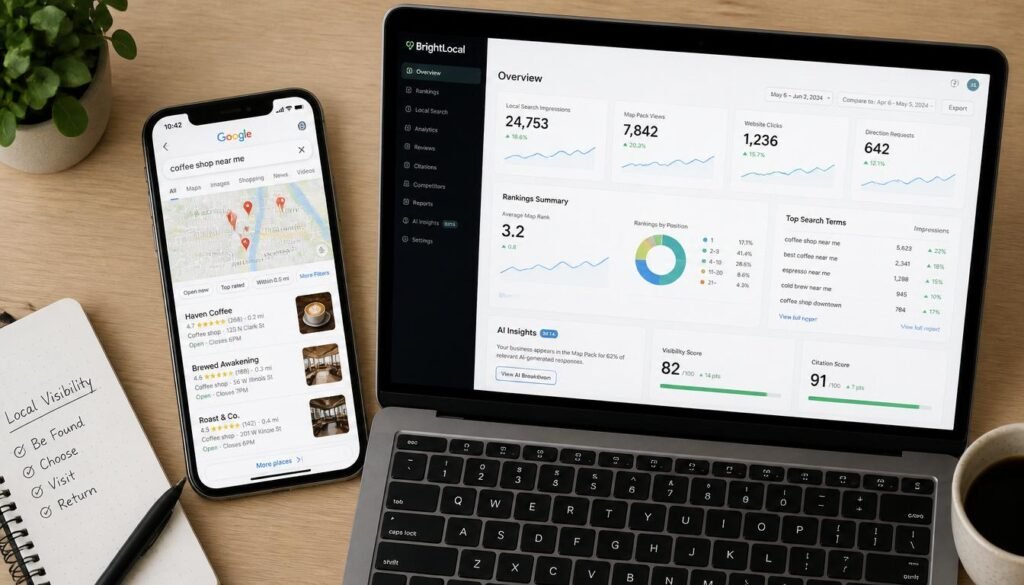
AI hasn’t eliminated that grind. But it’s taken a big chunk of it off your plate.
Citation audits used to take half a day or more now take minutes. Tools scan directories, flag inconsistencies, and surface the exact listings that need attention. That’s genuinely useful not “useful” in the marketing brochure sense, but the kind of useful that makes you wonder how you managed before.
The content side has improved too. Location-specific pages used to be a nightmare to scale without sounding repetitive. AI can now generate solid first drafts for neighborhood landing pages, local FAQs, and service area content but here’s what most people miss those drafts still need a human pass. The AI doesn’t know that “downtown” in your city means a very specific three-block area, or that locals call the neighborhood something completely different from what Google Maps says. That local texture? Still very much a human job.
Resources like RankDMS have been covering this shift well worth bookmarking if you’re trying to stay current on how local search is evolving.
Link Building: Still Painful, Now Slightly Less Painful
Let’s not romanticize link building. Even with AI, it’s still one of the harder parts of SEO. Cold outreach gets ignored. Good content gets overlooked. Sites you’d love a link from never respond.
But AI has really changed the front end of the process the research and targeting in meaningful ways.
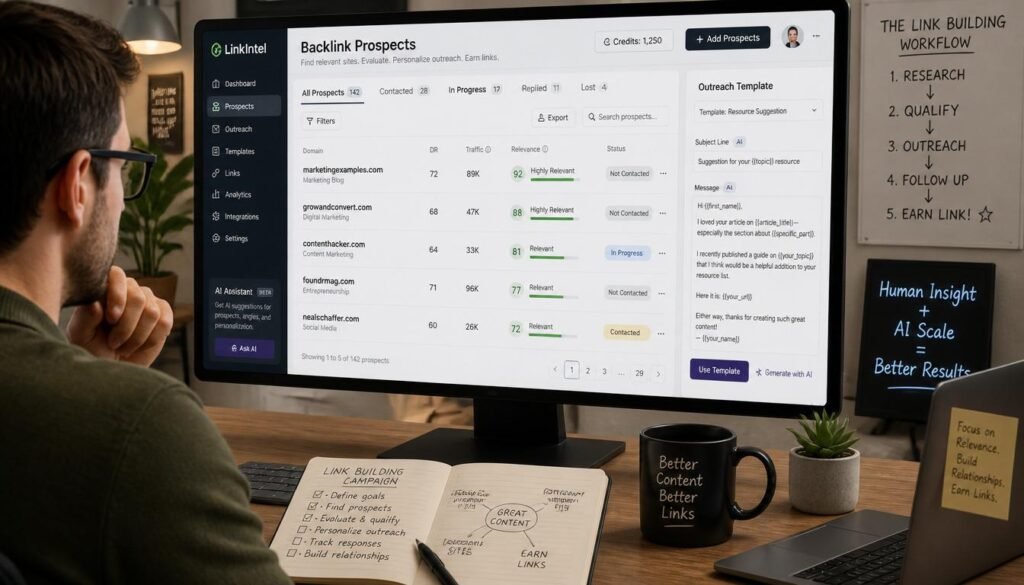
It used to take hours of manual digging through competitor backlinks, industry blogs, resource pages and niche directories to find relevant prospects. AI tools can now identify qualified prospects in a fraction of the time, scoring them by relevance and authority before you’ve even written a single email. the economics of outreach campaigns significantly.
Content gap analysis figuring out what you’re missing that competitors rank for is another area where AI earns its keep. It’s not glamorous work, but it’s the kind of insight that tells you exactly what to write if you want links from serious publishers in your niche.
What AI hasn’t fixed is the human side of link building: the follow-up, the relationship, the personalized pitch that doesn’t feel like it came from a template. Those things still require real effort and real people. Any agency or consultant telling you AI fully automates link acquisition is either misinformed or trying to sell you something.
If you want to see how a more balanced, AI-assisted approach actually looks in practice, the [SEO services at RankDMS are a solid example of that methodology done right.
The “Honest Part” Not Anybody Has the Courage to Admit
There’s one thing that is often lost in all of the excitement: The value of AI is only as great as the strategy that it’s based on.
If you enhance a poor SEO with AI, then you will be finishing that poor SEO even faster! That’s it. No, you’re not going to boom into the ranks simply because you are using machine learning to study keywords not if your site is technically suffering, it lacks in depth understanding (no real expertise in a niche), or you have no real control (no genuinely valid content).
For businesses who had the knowledge about what good SEO is are the ones that were creating traffic and have any meaning. For business that knew what good SEO is, those who were creating traffic and carries any meaning. They had the ability to process things quickly and extensively, thanks to AI. There existed a strategy in place.
Although it’s not a computer science scale, however It’s simply a simple and easy description of how the tool works.
Where This Leaves You
If you’re the business owner or client, which would be the client for whom you’d be performing local SEO for, the equation is quite as easy. Look for work that requires many data elements and repetitive work operations. There the time-saving aspect of AI is accompanied by the lowest level of risk. Avoid doing cosy judgements, creative work, and connecting others onto people.
This division is NOT one to obtain any points in tech evangelist. But it will be helpful with ranking and as it is going as long as that, that’s what matters.
Frequently Asked Questions
1.Does AI actually help small local businesses rank better on Google.
Yes, but not alone. As one of the advantages AI offers to help small businesses, it will save time on managing citations by generating outlines for your content from the location, and by marking up of reviews. When it comes to helping small businesses keep time to tasks that are often overlooked, the following features of AI can help: Citation Management to create content outlines based on the location; and Monitoring Reviews. Over time, as those are taken care of, so shall be the rank.
Seo-marketers can leverage AI in several effective ways:
2. How can Seo-marketers make the most of AI?
This will depend on whether or not they are using it for a specific purpose. Generally it’s fine if they make copies that have been reviewed and edited by AI and enhanced by adding knowledge obtained from the real world. Nowadays, businesses face quality and trust issues due to the fact that they publish out the unedited, out-of-the-box output of an AI.
3. In particular, what are the advantages of AI for link building?
Primarily a research-focused, more quickly identifying prospects, smarter filtering for relevance and authority, and content gap analysis. There is always an element of a human touch to link building outreach and relationship.
4. Can AI optimize Google Business Profile?
Partially. AI tools help you detect gaps in the data, add categories and even be helpful with the formulation of Q&A responses and really copy. But there’s still an element of judgment in making a decision as to positioning a business against local competitors, etc.
5. What is realistic with regards to the effect of AI on SEO outcomes?
Don’t expect any miracles, think efficiency gains. AI can assist you to accomplish more within less, and might discover things you would possibly not consider any other means. Those companies that will use it properly go on to view quicker execution and regularly better optimization — which accumulates to better positioning with time.